The Affluence Method Explained
The Affluence Method Explained
The Affluence Method Explained
Step 1: Build Your Buffer
Step 1: Build Your Buffer
Step 1: Build Your Buffer
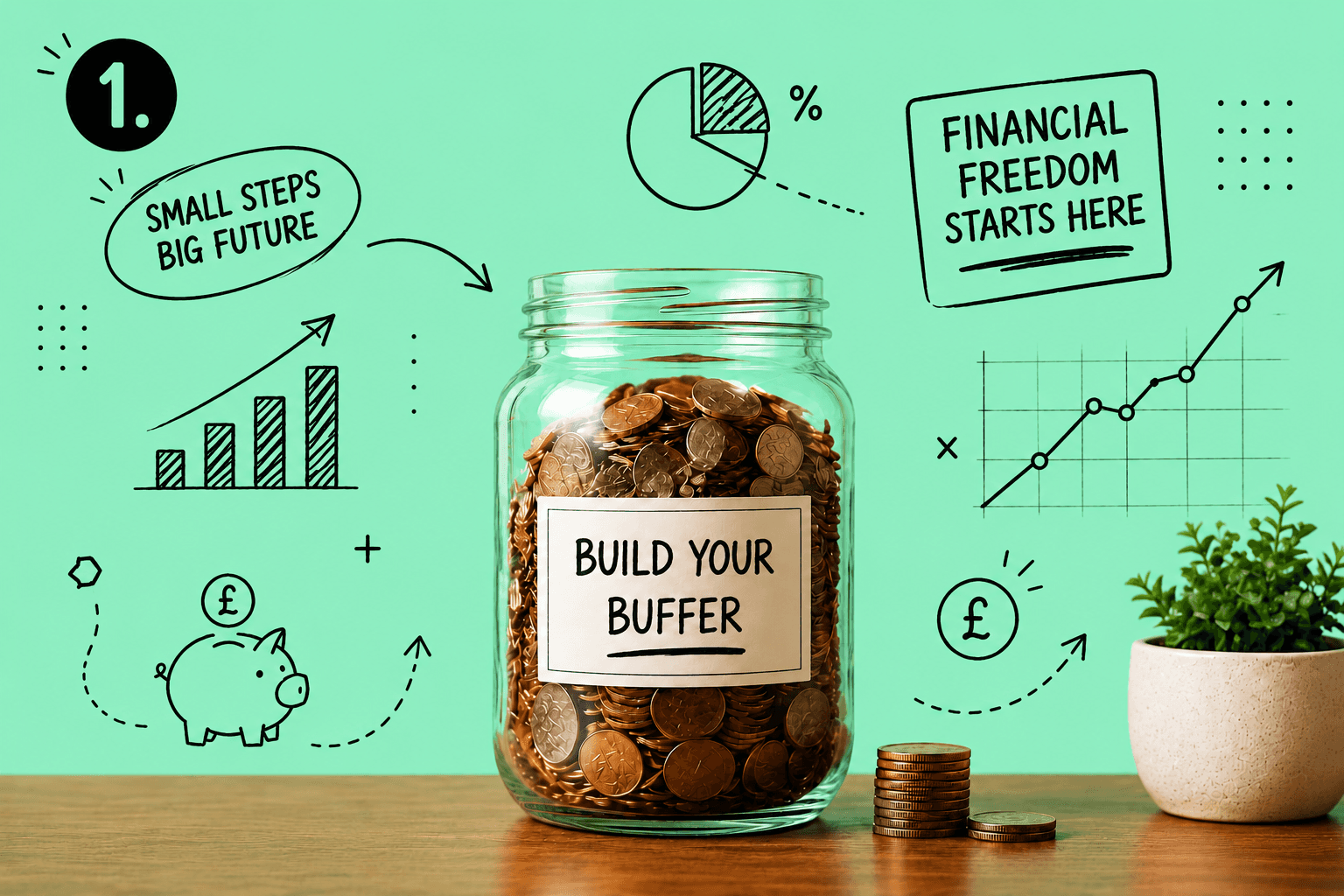
What this step is: Save £1,000 as fast as you can. Do this before anything else.
Why we start here: Think about your car. What if it breaks down? Or your washing machine stops working? For most people, that bill goes on a credit card. Then that one bill turns into months of debt. A small buffer stops this from happening. It is not your big safety net. It is just enough to stop a bad week from becoming a bad year.
What this looks like for real people: Meet Danny. He drives for a delivery app and earns £1,600 a month. His washing machine breaks. Without a buffer, that's £300 on a credit card. He pays interest on it for eight months. With £1,000 saved, he just pays for the washing machine. Then he moves on with his week.
Or think about Sarah. She works in a warehouse. She gets a parking fine she didn't plan for. Without a buffer, that fine turns into a bigger bill with late fees. With a buffer, she pays it that same day. Then she forgets about it.
How long this takes: Most people save £1,000 in 4 to 12 weeks. They don't change their whole life to do it. They just cut one or two things for a while, like takeaways, and save that money instead.
What this step is: Save £1,000 as fast as you can. Do this before anything else.
Why we start here: Think about your car. What if it breaks down? Or your washing machine stops working? For most people, that bill goes on a credit card. Then that one bill turns into months of debt. A small buffer stops this from happening. It is not your big safety net. It is just enough to stop a bad week from becoming a bad year.
What this looks like for real people: Meet Danny. He drives for a delivery app and earns £1,600 a month. His washing machine breaks. Without a buffer, that's £300 on a credit card. He pays interest on it for eight months. With £1,000 saved, he just pays for the washing machine. Then he moves on with his week.
How long this takes: Most people save £1,000 in 4 to 12 weeks. They don't change their whole life to do it. They just cut one or two things for a while, like takeaways, and save that money instead.
What this step is: Save £1,000 as fast as you can. Do this before anything else.
Why we start here: Think about your car. What if it breaks down? Or your washing machine stops working? For most people, that bill goes on a credit card. Then that one bill turns into months of debt. A small buffer stops this from happening. It is not your big safety net. It is just enough to stop a bad week from becoming a bad year.
What this looks like for real people: Meet Danny. He drives for a delivery app and earns £1,600 a month. His washing machine breaks. Without a buffer, that's £300 on a credit card. He pays interest on it for eight months. With £1,000 saved, he just pays for the washing machine. Then he moves on with his week.
Or think about Sarah. She works in a warehouse. She gets a parking fine she didn't plan for. Without a buffer, that fine turns into a bigger bill with late fees. With a buffer, she pays it that same day. Then she forgets about it.
How long this takes: Most people save £1,000 in 4 to 12 weeks. They don't change their whole life to do it. They just cut one or two things for a while, like takeaways, and save that money instead.

Step 2: Break the Debt Cycle
Step 2: Break the Debt Cycle
Step 2: Break the Debt Cycle
What this step is: Pay off your credit cards, car finance, and buy now pay later. Stop using borrowed money for everyday things. This is everything except your mortgage.
Why we do this next: If you pay interest every month, you are working for the bank first. You are not working for yourself. Some people save money while still paying 25% interest on a credit card. That never makes sense. The interest costs you more than the savings earn you.
What this looks like for real people: Meet Chloe. She is a hairdresser and earns £22,000 a year. She has £4,000 spread across two credit cards and a car loan. Every month, £180 goes just to interest and minimum payments. That money buys nothing. We list her debts from smallest to biggest. She pays extra on the smallest one first. She keeps paying minimums on the rest. Soon, the smallest one hits zero. That first win keeps her going.
Or think about Tom, a plumber. He uses his overdraft every month just to get by. He doesn't think he's "in trouble." But he pays a fee every month just to use his own money early. This happens to him every single month, forever, unless something changes.
Why we start small, not big: Some plans say pay off your highest interest debt first. But most people give up on that plan. It takes too long to feel like it's working. Paying off the smallest debt first gives you a win in weeks. That win is what keeps people going until the end.
What this step is: Pay off your credit cards, car finance, and buy now pay later. Stop using borrowed money for everyday things. This is everything except your mortgage.
Why we do this next: If you pay interest every month, you are working for the bank first. You are not working for yourself. Some people save money while still paying 25% interest on a credit card. That never makes sense. The interest costs you more than the savings earn you.
What this looks like for real people: Meet Chloe. She is a hairdresser and earns £22,000 a year. She has £4,000 spread across two credit cards and a car loan. Every month, £180 goes just to interest and minimum payments. That money buys nothing. We list her debts from smallest to biggest. She pays extra on the smallest one first. She keeps paying minimums on the rest. Soon, the smallest one hits zero. That first win keeps her going.
Why we start small, not big: Some plans say pay off your highest interest debt first. But most people give up on that plan. It takes too long to feel like it's working. Paying off the smallest debt first gives you a win in weeks. That win is what keeps people going until the end.
What this step is: Pay off your credit cards, car finance, and buy now pay later. Stop using borrowed money for everyday things. This is everything except your mortgage.
Why we do this next: If you pay interest every month, you are working for the bank first. You are not working for yourself. Some people save money while still paying 25% interest on a credit card. That never makes sense. The interest costs you more than the savings earn you.
What this looks like for real people: Meet Chloe. She is a hairdresser and earns £22,000 a year. She has £4,000 spread across two credit cards and a car loan. Every month, £180 goes just to interest and minimum payments. That money buys nothing. We list her debts from smallest to biggest. She pays extra on the smallest one first. She keeps paying minimums on the rest. Soon, the smallest one hits zero. That first win keeps her going.
Or think about Tom, a plumber. He uses his overdraft every month just to get by. He doesn't think he's "in trouble." But he pays a fee every month just to use his own money early. This happens to him every single month, forever, unless something changes.
Why we start small, not big: Some plans say pay off your highest interest debt first. But most people give up on that plan. It takes too long to feel like it's working. Paying off the smallest debt first gives you a win in weeks. That win is what keeps people going until the end.

Step 3: Secure Your Base
Step 3: Secure Your Base
Step 3: Secure Your Base
What this step is: Save enough money to cover 3 to 6 months of your basic bills. This means rent, food, transport, and insurance. Not everything you spend, just the basics.
Why we do this next: Your £1,000 buffer covers a broken washing machine. It does not cover losing your job. Or a long illness. Or your work hours getting cut. This step protects you if something big goes wrong.
What this looks like for real people: Meet Grace. She cleans houses for three different families. One of them moves away and she loses that work overnight. That's a third of her income, gone, with no warning. If her basic bills cost £900 a month, having £2,700 to £5,400 saved gives her time to find new work. She doesn't fall behind on rent while she looks.
Or think about Marcus, who works in construction. He gets laid off between jobs. This happens a lot in his line of work. With 3 to 6 months saved, that gap is stressful but he gets through it. Without savings, he ends up back on the credit card he just paid off in Step 2.
Why this is different from your buffer: Your £1,000 from Step 1 is for small surprises. This fund is for the big ones, like losing your job or getting sick. Keeping them separate means you never touch this fund for something small. That something small should come from your buffer instead.
What this step is: Save enough money to cover 3 to 6 months of your basic bills. This means rent, food, transport, and insurance. Not everything you spend, just the basics.
Why we do this next: Your £1,000 buffer covers a broken washing machine. It does not cover losing your job. Or a long illness. Or your work hours getting cut. This step protects you if something big goes wrong.
What this looks like for real people: Meet Grace. She cleans houses for three different families. One of them moves away and she loses that work overnight. That's a third of her income, gone, with no warning. If her basic bills cost £900 a month, having £2,700 to £5,400 saved gives her time to find new work. She doesn't fall behind on rent while she looks.
Why this is different from your buffer: Your £1,000 from Step 1 is for small surprises. This fund is for the big ones, like losing your job or getting sick. Keeping them separate means you never touch this fund for something small. That something small should come from your buffer instead.
What this step is: Save enough money to cover 3 to 6 months of your basic bills. This means rent, food, transport, and insurance. Not everything you spend, just the basics.
Why we do this next: Your £1,000 buffer covers a broken washing machine. It does not cover losing your job. Or a long illness. Or your work hours getting cut. This step protects you if something big goes wrong.
What this looks like for real people: Meet Grace. She cleans houses for three different families. One of them moves away and she loses that work overnight. That's a third of her income, gone, with no warning. If her basic bills cost £900 a month, having £2,700 to £5,400 saved gives her time to find new work. She doesn't fall behind on rent while she looks.
Or think about Marcus, who works in construction. He gets laid off between jobs. This happens a lot in his line of work. With 3 to 6 months saved, that gap is stressful but he gets through it. Without savings, he ends up back on the credit card he just paid off in Step 2.
Why this is different from your buffer: Your £1,000 from Step 1 is for small surprises. This fund is for the big ones, like losing your job or getting sick. Keeping them separate means you never touch this fund for something small. That something small should come from your buffer instead.

Step 4: Fund Life Before It Happens
Step 4: Fund Life Before It Happens
Step 4: Fund Life Before It Happens
What this step is: Set up separate savings pots for costs you know are coming. Things like car repairs, Christmas, birthdays, holidays, or a house deposit. Save for them before they surprise you.
Why we do this next: Most money "emergencies" are not really emergencies. They are costs you could have seen coming. Christmas comes every year on the same date. Your car will need work at some point. Your child's birthday isn't a surprise. The problem isn't that these costs happen. It's that no one saved for them ahead of time. So they feel like a crisis when they land.
What this looks like for real people: Meet Amy. She works in retail and has a young son. Every December, Christmas wipes out her savings. Every January, she's back on a credit card. If she saves £40 a month starting in February, she has £440 by December. Now Christmas is something she can pay for. It's not something that puts her in debt.
Or think about a couple, Josh and Priya, saving for their first home. Instead of saving "whatever is left over" each month, which is usually nothing, they set up a standing order the day they get paid. It goes straight into their house deposit pot. The goal has a name and a number. So it actually gets funded.
How this works with Step 5: This step and the next step happen at the same time. Once your emergency fund is done, some of your spare money goes into these pots. Some goes into investing. You build your future and cover today's costs at the same time.
What this step is: Set up separate savings pots for costs you know are coming. Things like car repairs, Christmas, birthdays, holidays, or a house deposit. Save for them before they surprise you.
Why we do this next: Most money "emergencies" are not really emergencies. They are costs you could have seen coming. Christmas comes every year on the same date. Your car will need work at some point. Your child's birthday isn't a surprise. The problem isn't that these costs happen. It's that no one saved for them ahead of time. So they feel like a crisis when they land.
What this looks like for real people: Meet Amy. She works in retail and has a young son. Every December, Christmas wipes out her savings. Every January, she's back on a credit card. If she saves £40 a month starting in February, she has £440 by December. Now Christmas is something she can pay for. It's not something that puts her in debt.
How this works with Step 5: This step and the next step happen at the same time. Once your emergency fund is done, some of your spare money goes into these pots. Some goes into investing. You build your future and cover today's costs at the same time.
What this step is: Set up separate savings pots for costs you know are coming. Things like car repairs, Christmas, birthdays, holidays, or a house deposit. Save for them before they surprise you.
Why we do this next: Most money "emergencies" are not really emergencies. They are costs you could have seen coming. Christmas comes every year on the same date. Your car will need work at some point. Your child's birthday isn't a surprise. The problem isn't that these costs happen. It's that no one saved for them ahead of time. So they feel like a crisis when they land.
What this looks like for real people: Meet Amy. She works in retail and has a young son. Every December, Christmas wipes out her savings. Every January, she's back on a credit card. If she saves £40 a month starting in February, she has £440 by December. Now Christmas is something she can pay for. It's not something that puts her in debt.
Or think about a couple, Josh and Priya, saving for their first home. Instead of saving "whatever is left over" each month, which is usually nothing, they set up a standing order the day they get paid. It goes straight into their house deposit pot. The goal has a name and a number. So it actually gets funded.
How this works with Step 5: This step and the next step happen at the same time. Once your emergency fund is done, some of your spare money goes into these pots. Some goes into investing. You build your future and cover today's costs at the same time.

Step 5: Invest on Autopilot
Step 5: Invest on Autopilot
Step 5: Invest on Autopilot
What this step is: Invest the same amount of money every single month. Do it automatically. Do it no matter what the market is doing. Do it no matter how you feel that week.
Why we do this next: Most people think investing is something you do "when there's extra money." But there's always something else that extra money could go on. So most people never start. Making it automatic takes away the choice. The money leaves your account before you can talk yourself out of it. Just like your rent does.
What this looks like for real people: Meet James, an electrician. He earns £2,400 a month. He sets up a standing order for £150 into an investment account on payday. It happens before he even looks at what's left. He never sees that £150 as money he can spend. So he never misses it. Over 20 years, this steady habit does more for his future than trying to guess the best time to invest.
Or think about Priya, a nurse. She used to think investing was only for people with lots of spare cash. Once her debt was paid off and her emergency fund was full, she started putting away £75 a month. That won't change her life next year. But left alone for 25 years, growing bit by bit, it becomes something very different to what a savings account could ever give her.
Why doing it every month matters more than the amount: Someone who invests £50 a month for 20 years, without stopping, usually ends up with more than someone who invests £300 a month for six months, then quits. Being steady beats being big. That's the whole point of this step.
What this step is: Invest the same amount of money every single month. Do it automatically. Do it no matter what the market is doing. Do it no matter how you feel that week.
Why we do this next: Most people think investing is something you do "when there's extra money." But there's always something else that extra money could go on. So most people never start. Making it automatic takes away the choice. The money leaves your account before you can talk yourself out of it. Just like your rent does.
What this looks like for real people: Meet James, an electrician. He earns £2,400 a month. He sets up a standing order for £150 into an investment account on payday. It happens before he even looks at what's left. He never sees that £150 as money he can spend. So he never misses it. Over 20 years, this steady habit does more for his future than trying to guess the best time to invest.
Why doing it every month matters more than the amount: Someone who invests £50 a month for 20 years, without stopping, usually ends up with more than someone who invests £300 a month for six months, then quits. Being steady beats being big. That's the whole point of this step.
What this step is: Invest the same amount of money every single month. Do it automatically. Do it no matter what the market is doing. Do it no matter how you feel that week.
Why we do this next: Most people think investing is something you do "when there's extra money." But there's always something else that extra money could go on. So most people never start. Making it automatic takes away the choice. The money leaves your account before you can talk yourself out of it. Just like your rent does.
What this looks like for real people: Meet James, an electrician. He earns £2,400 a month. He sets up a standing order for £150 into an investment account on payday. It happens before he even looks at what's left. He never sees that £150 as money he can spend. So he never misses it. Over 20 years, this steady habit does more for his future than trying to guess the best time to invest.
Or think about Priya, a nurse. She used to think investing was only for people with lots of spare cash. Once her debt was paid off and her emergency fund was full, she started putting away £75 a month. That won't change her life next year. But left alone for 25 years, growing bit by bit, it becomes something very different to what a savings account could ever give her.
Why doing it every month matters more than the amount: Someone who invests £50 a month for 20 years, without stopping, usually ends up with more than someone who invests £300 a month for six months, then quits. Being steady beats being big. That's the whole point of this step.

Step 6: Expand Your Affluence
Step 6: Expand Your Affluence
Step 6: Expand Your Affluence
What this step is: Grow the gap between what you earn and what you spend. Then use that gap on purpose. Not by accident.
Why we do this last: This is the step most people try to jump to first. That's exactly why it doesn't work for them. You can't really grow your wealth while you're still in debt. Or while one broken boiler could wreck your month. This step only works once Steps 1 to 5 are already running quietly in the background. Once they are, every pay rise, every bit of overtime, every extra bit of money isn't just something to spend. It's fuel you get to point somewhere on purpose.
What this looks like for real people: Meet Ryan, a shift supervisor. He gets a £2,000 pay rise after five years at his job. In the past, that money would have quietly disappeared, a bigger car, more takeaways, nothing to show for it a year later. This time, he decides in advance. Half goes toward investing more each month. A quarter goes toward a goal that matters to him. A quarter he gets to spend and enjoy, without any guilt, because the rest is already working for him.
Or think about a young couple, Beth and Sam. They just finished paying off their car loan from Step 2. That frees up £220 a month. Instead of letting it disappear into daily spending, they decide where it goes. Some goes toward investing more. Some goes into their house deposit pot from Step 4. The money doesn't just vanish. It gets pointed at something that matters to them.
What "affluence" really means: It isn't about being flashy or earning a huge salary. It's the gap between what comes in and what goes out. And what you choose to do with that gap once it exists. Grow the gap. Then use it on purpose. That's it.
What this step is: Grow the gap between what you earn and what you spend. Then use that gap on purpose. Not by accident.
Why we do this last: This is the step most people try to jump to first. That's exactly why it doesn't work for them. You can't really grow your wealth while you're still in debt. Or while one broken boiler could wreck your month. This step only works once Steps 1 to 5 are already running quietly in the background. Once they are, every pay rise, every bit of overtime, every extra bit of money isn't just something to spend. It's fuel you get to point somewhere on purpose.
What this looks like for real people: Meet Ryan, a shift supervisor. He gets a £2,000 pay rise after five years at his job. In the past, that money would have quietly disappeared, a bigger car, more takeaways, nothing to show for it a year later. This time, he decides in advance. Half goes toward investing more each month. A quarter goes toward a goal that matters to him. A quarter he gets to spend and enjoy, without any guilt, because the rest is already working for him.
What "affluence" really means: It isn't about being flashy or earning a huge salary. It's the gap between what comes in and what goes out. And what you choose to do with that gap once it exists. Grow the gap. Then use it on purpose. That's it.
What this step is: Grow the gap between what you earn and what you spend. Then use that gap on purpose. Not by accident.
Why we do this last: This is the step most people try to jump to first. That's exactly why it doesn't work for them. You can't really grow your wealth while you're still in debt. Or while one broken boiler could wreck your month. This step only works once Steps 1 to 5 are already running quietly in the background. Once they are, every pay rise, every bit of overtime, every extra bit of money isn't just something to spend. It's fuel you get to point somewhere on purpose.
What this looks like for real people: Meet Ryan, a shift supervisor. He gets a £2,000 pay rise after five years at his job. In the past, that money would have quietly disappeared, a bigger car, more takeaways, nothing to show for it a year later. This time, he decides in advance. Half goes toward investing more each month. A quarter goes toward a goal that matters to him. A quarter he gets to spend and enjoy, without any guilt, because the rest is already working for him.
Or think about a young couple, Beth and Sam. They just finished paying off their car loan from Step 2. That frees up £220 a month. Instead of letting it disappear into daily spending, they decide where it goes. Some goes toward investing more. Some goes into their house deposit pot from Step 4. The money doesn't just vanish. It gets pointed at something that matters to them.
What "affluence" really means: It isn't about being flashy or earning a huge salary. It's the gap between what comes in and what goes out. And what you choose to do with that gap once it exists. Grow the gap. Then use it on purpose. That's it.
Why the order matters?
Why the order matters?
Why the order matters?
Every step above only works because of the step before it. Investing before you've paid off debt means you're losing money to interest while you try to grow it. Saving for goals before you have an emergency fund means the first crisis wipes out your savings. This isn't just "save, pay off debt, and invest" as three loose ideas. It's a specific order. Each step protects the one before it. And sets up the one after it.
Every step above only works because of the step before it. Investing before you've paid off debt means you're losing money to interest while you try to grow it. Saving for goals before you have an emergency fund means the first crisis wipes out your savings. This isn't just "save, pay off debt, and invest" as three loose ideas. It's a specific order. Each step protects the one before it. And sets up the one after it.
Every step above only works because of the step before it. Investing before you've paid off debt means you're losing money to interest while you try to grow it. Saving for goals before you have an emergency fund means the first crisis wipes out your savings. This isn't just "save, pay off debt, and invest" as three loose ideas. It's a specific order. Each step protects the one before it. And sets up the one after it.
Interested in sorting out your financial future?
Interested in sorting out your financial future?
Interested in sorting out your financial future?